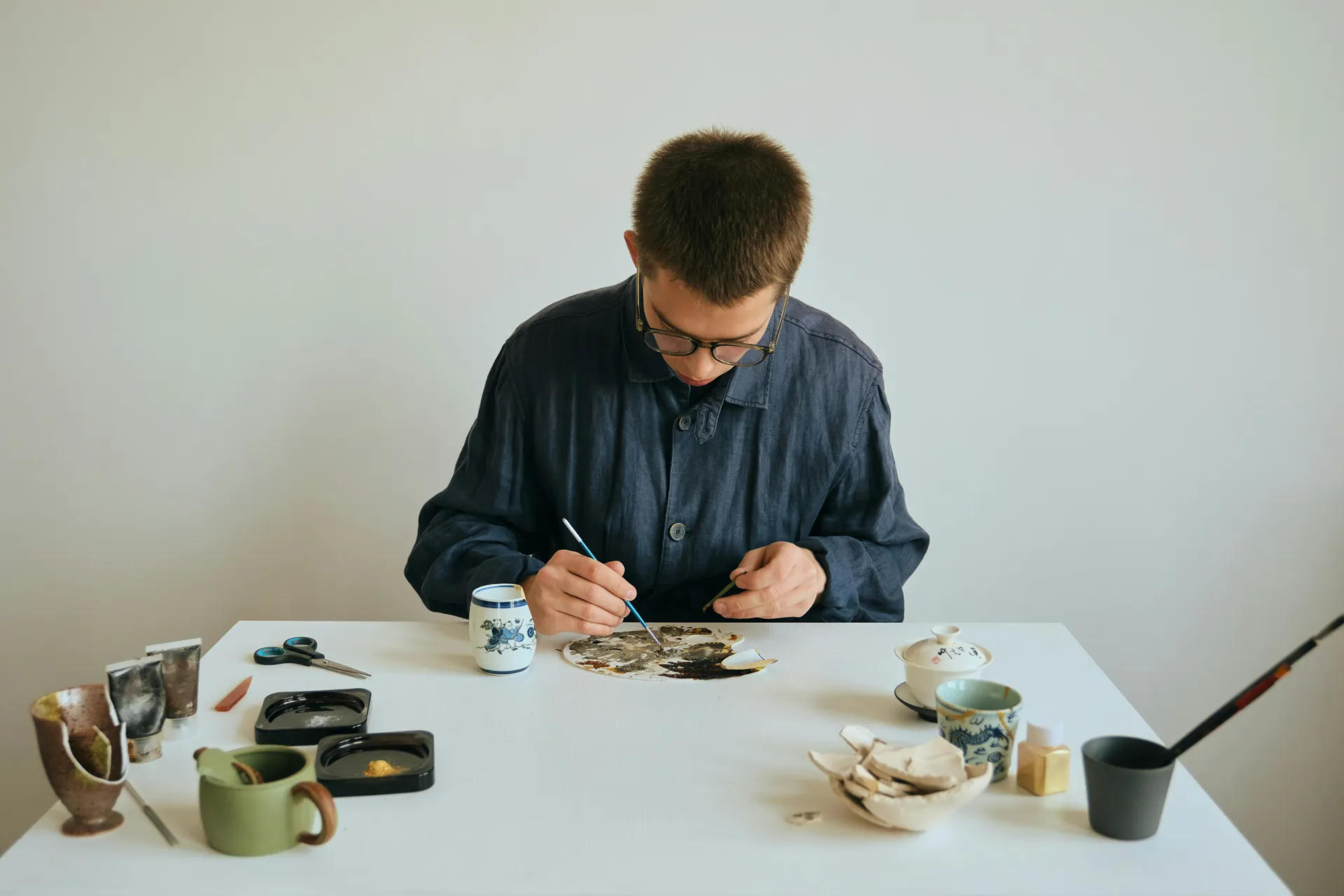
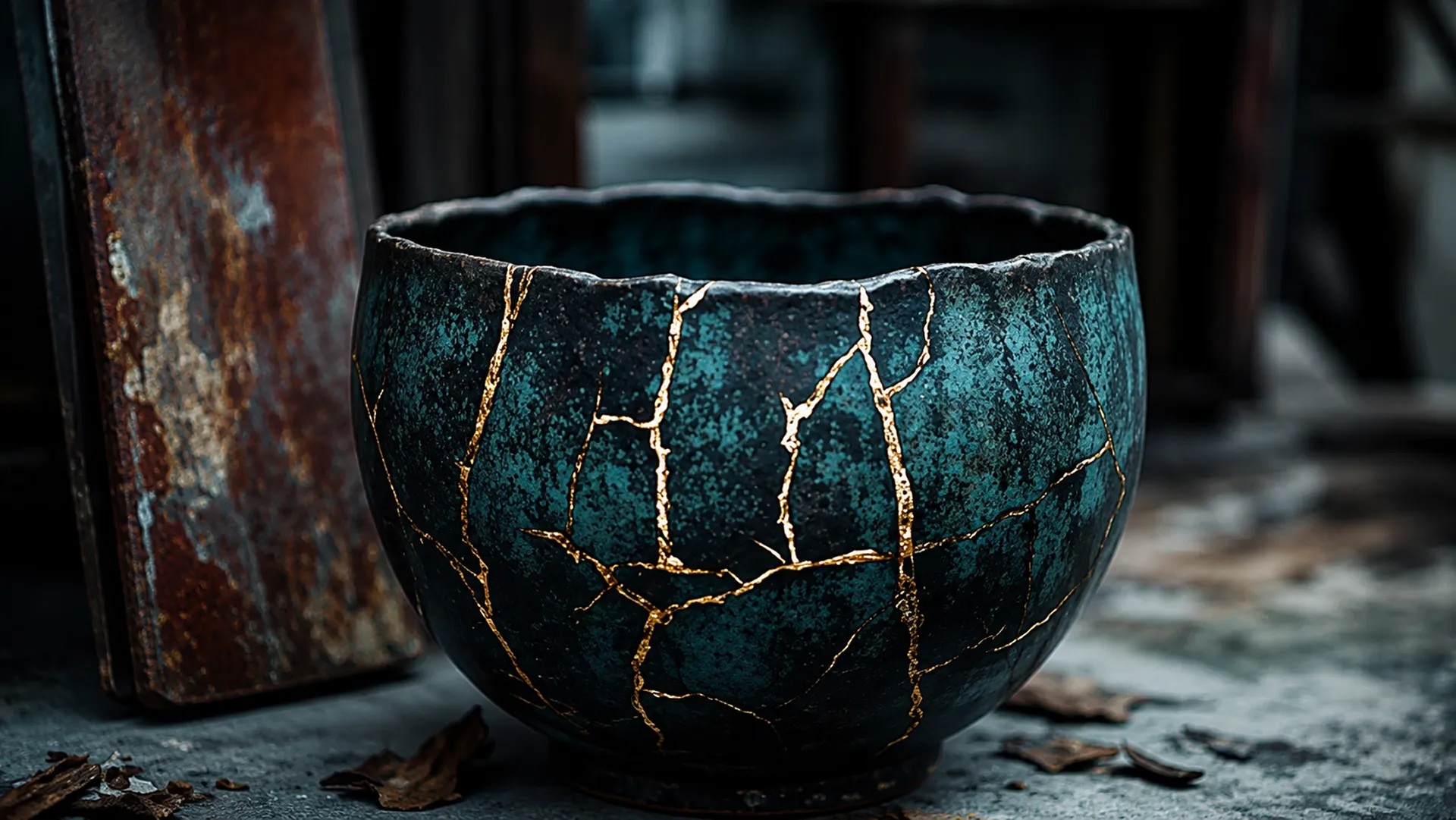
In many cultures, repair is approached as a way of returning an object to its original condition. Damage is concealed, surfaces are refinished and imperfections are removed in pursuit of completeness. Kintsugi takes a different path entirely. Rather than hiding fractures, the Japanese technique traces them openly using lacquer mixed with powdered gold, silver or platinum, allowing the repair itself to remain visible within the object.
The practice is believed to have developed during the late Muromachi period alongside the rise of the Japanese tea ceremony. According to widely repeated accounts, shogun Ashikaga Yoshimasa once sent a damaged Chinese tea bowl back for repair, only for it to return reinforced with crude metal staples. Japanese craftsmen later developed an alternative method where the fracture lines became integrated into the visual composition of the ceramic itself. Instead of disguising the damage, the repair introduced another layer of meaning and history into the object.
The repaired vessel carried visible evidence of use, breakage and continuation. Cracks became graphic lines moving across the ceramic surface, altering the character of the bowl rather than attempting to erase what had happened to it. In many ways, this is what separates Kintsugi from simple restoration. The process does not attempt to recreate perfection. It accepts change as part of the object’s life.

These ideas sit closely alongside broader Japanese attitudes toward ageing, atmosphere and material character. Within the philosophy commonly associated with wabi-sabi, irregularity and impermanence are not automatically treated as flaws. A weathered timber surface, oxidised metal or uneven glaze can carry emotional depth precisely because it reveals time, use and exposure. Materials are allowed to change naturally rather than remain frozen in an untouched state.
This sensibility continues to influence architecture, interiors and craftsmanship throughout Japan today. Traditional Japanese spaces often avoid excessive polish or rigid uniformity. Timber darkens gradually with age. Brass softens through handling. Stone becomes smoother through movement and touch. Rather than concealing these changes, many environments allow materials to develop patina and variation over time.
Hospitality interiors increasingly draw from this approach because spaces that feel overly pristine or artificially perfect can often appear emotionally distant. Restaurants, bars and hotels tend to feel warmer when surfaces carry texture, grain and subtle irregularities that reveal the physical nature of the materials themselves. The atmosphere becomes less about visual perfection and more about sensory depth.
One of the most striking aspects of Kintsugi is the role of gold within the repair process. Gold traditionally symbolises permanence, luxury and value, yet within Kintsugi it appears only along the fracture lines. Attention is directed toward the weakest part of the object rather than away from it.
Visually, the repaired seams move across the ceramic almost like drawn lines or geological fractures. The interruption changes the composition entirely, creating tension between fragility and permanence. Similar principles appear frequently within architecture and interior design, where moments of contrast often create stronger visual depth than complete consistency. A reflective brass insert across darkened timber. Charred finishes placed beside polished lacquer. Heavy stone offset against delicate woven textiles. These shifts in materiality create rhythm and visual layering within a space.
Light also plays an important role. Japanese interiors often rely on shadow, reflection and filtered illumination rather than uniform brightness. Surfaces are allowed to catch light unevenly, revealing texture and irregularity gradually throughout the day. In many ways, the repaired seam within Kintsugi operates similarly. The fracture line becomes the point where light gathers and where the eye naturally settles.
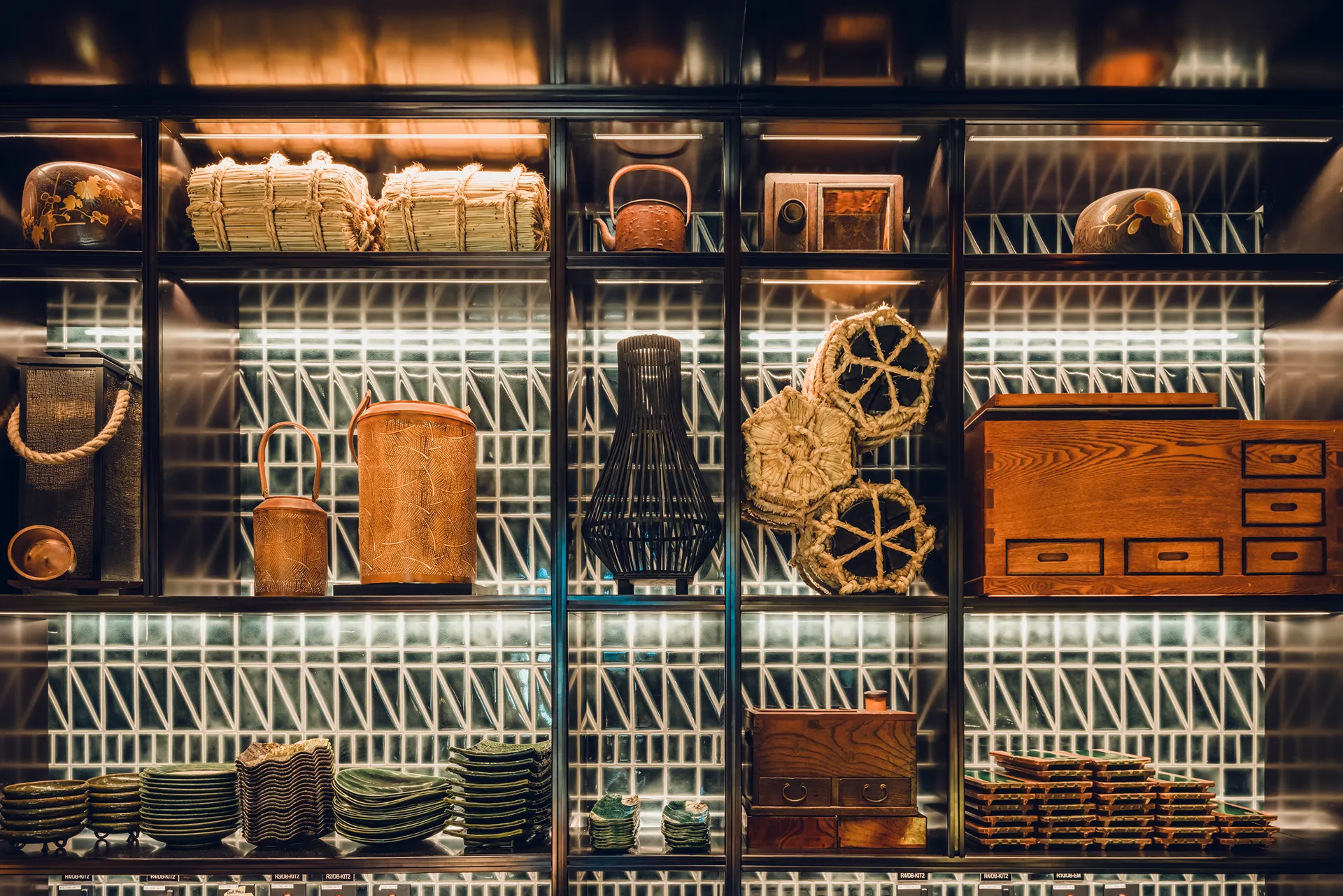
Today, the influence of Kintsugi extends far beyond ceramics. Architects, designers and artists frequently reference ideas of visible repair, layered materials and exposed construction within contemporary work. Part of the appeal comes from a growing resistance toward seamless industrial perfection and digitally manufactured uniformity. Materials that retain evidence of labour, ageing and hand-finishing often feel more grounded and human.
This becomes especially relevant within hospitality design. Contemporary dining environments increasingly emphasise process and material honesty through open kitchens, exposed grilling, handcrafted joinery and tactile finishes. Guests are drawn toward spaces where craftsmanship remains visible rather than hidden behind polished surfaces.
Within Japanese-inspired interiors particularly, value is often created through restraint, precision and atmosphere rather than overt decoration. Texture, shadow and patina become part of the emotional experience of the space.
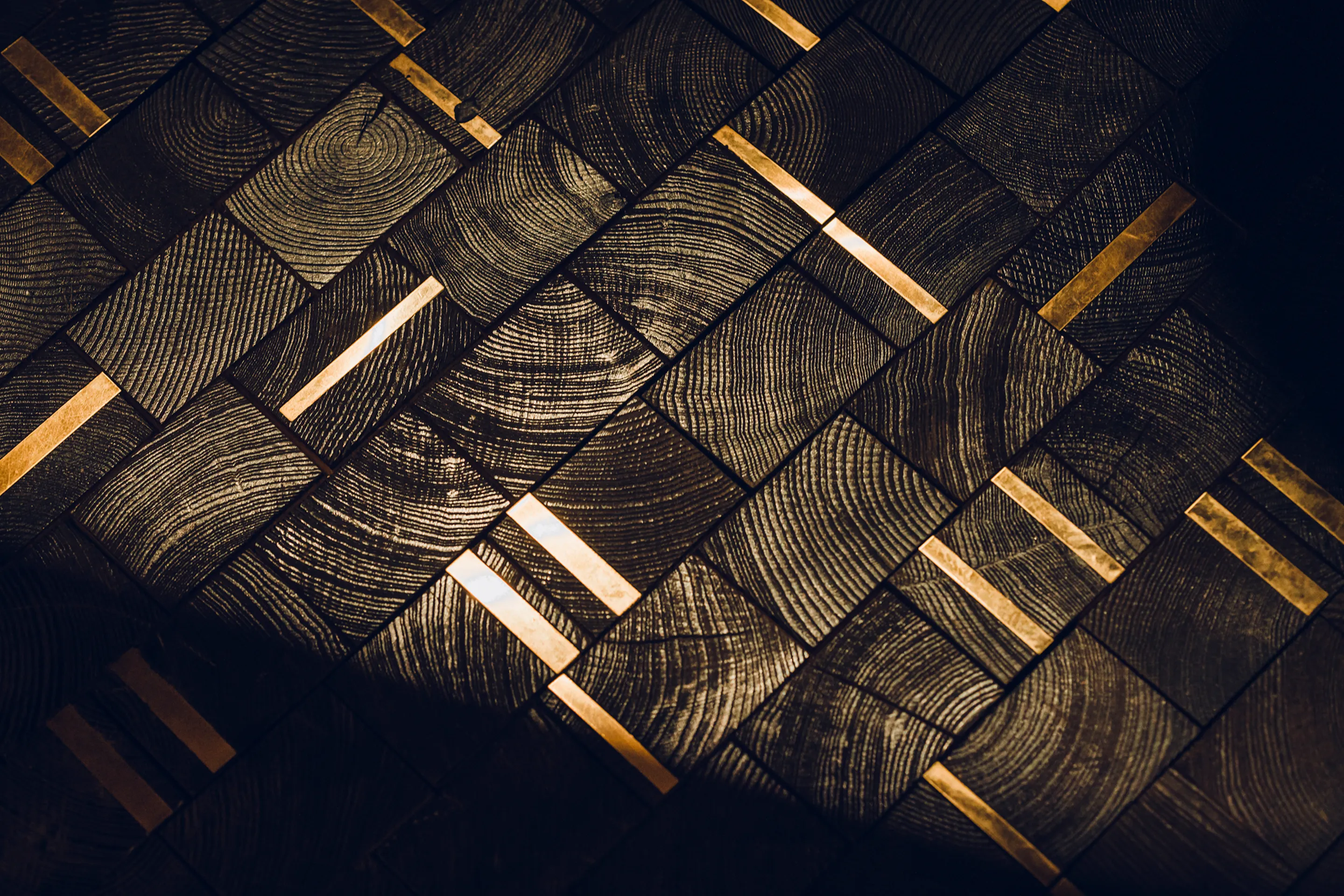
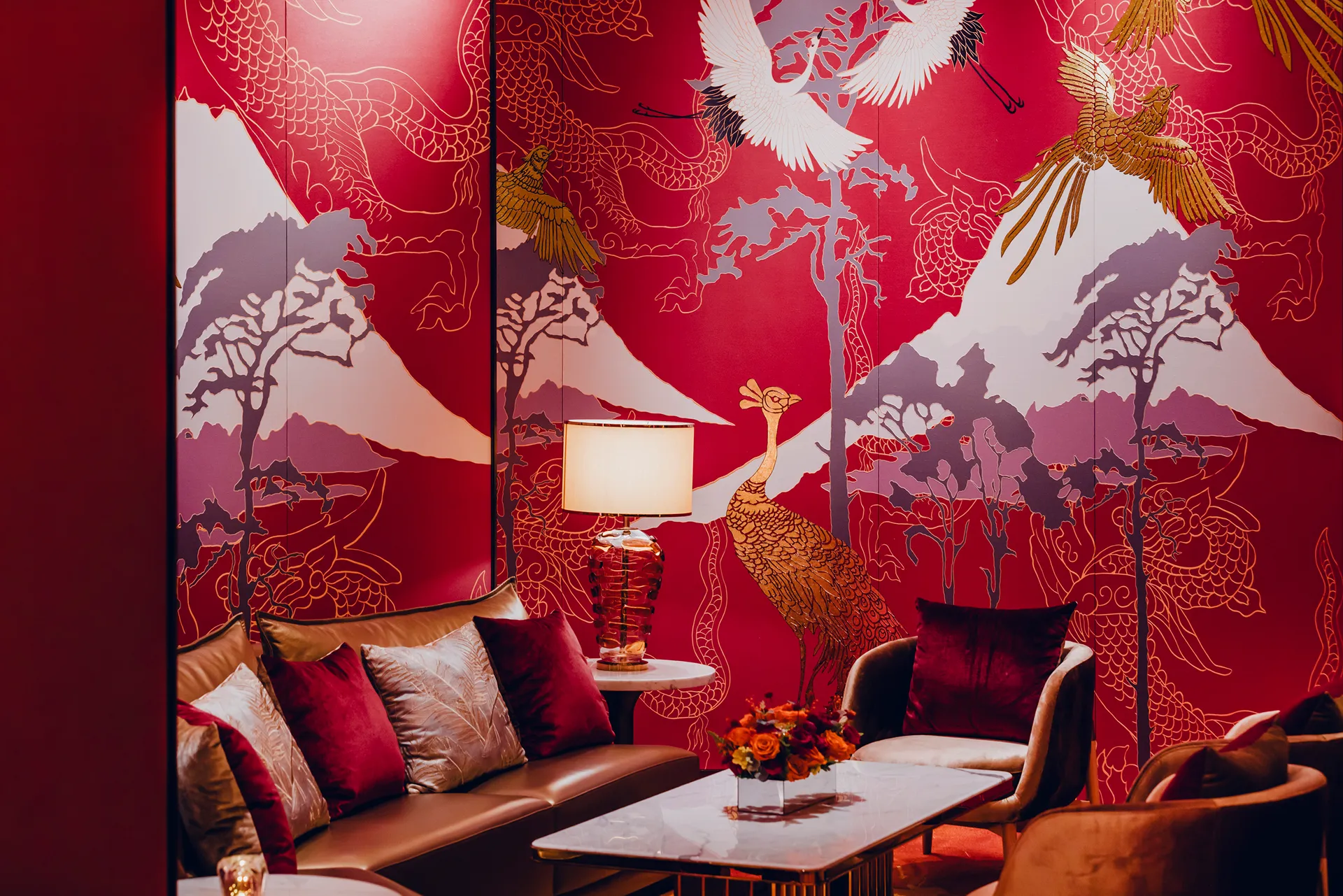
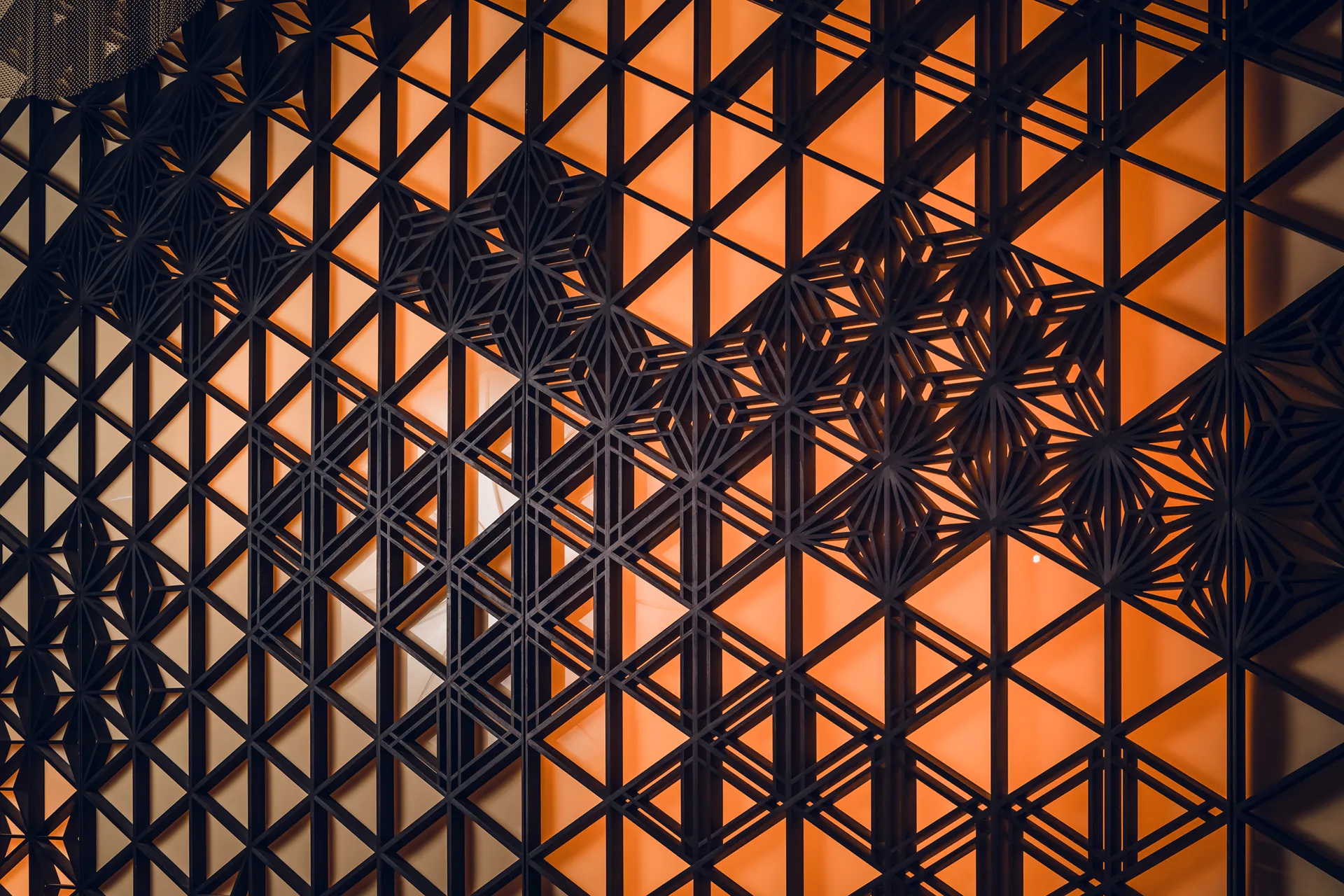
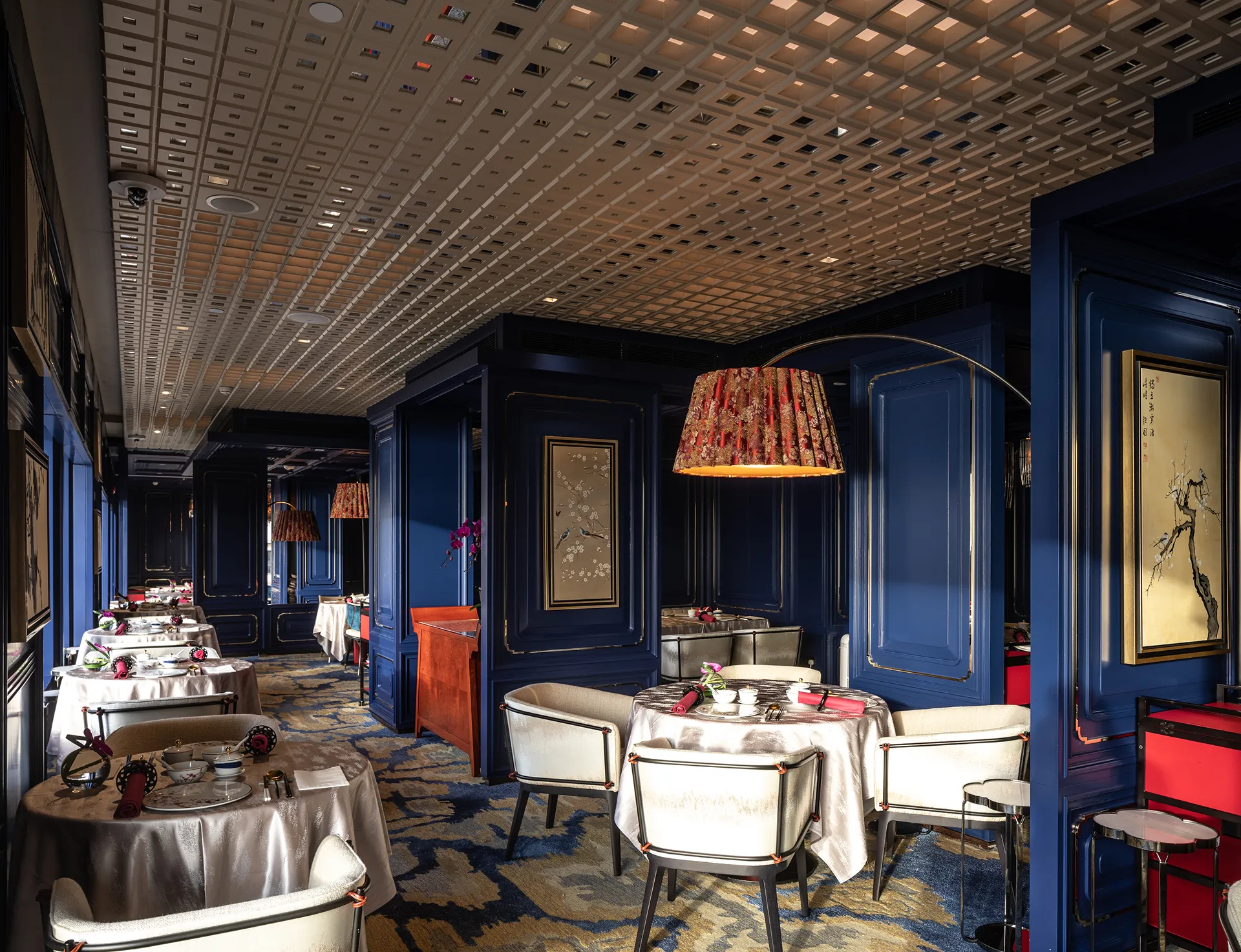
At Strawfire within Emirates Palace Mandarin Oriental Abu Dhabi, these ideas appear within the restaurant’s broader exploration of Japanese material culture, combustion and craftsmanship. Early concept development referenced fractured golden joinery patterns inspired by repaired ceramics, translating the visual language of cracked lacquer and metallic seams into floor detailing and surface compositions throughout the project.
The reference also connects naturally to the restaurant’s focus on transformation through heat. Warayaki cooking uses burning straw to produce intense flames, smoke and scorching, allowing ingredients to develop flavour through controlled exposure to fire. Throughout the interior, reflective gold finishes, textured materials and layered surfaces reinforce this atmosphere of heat, shadow and gradual material change. Brass develops patina over time. Ceramic surfaces catch uneven reflections. Dark timber absorbs shifting light differently across the day.
Rather than pursuing polished uniformity, the restaurant allows variation, texture and material evolution to remain visible within the experience itself. The relevance of Kintsugi here lies less in decoration and more in the shared idea that transformation leaves traces behind, whether through repair, fire, ageing or use over time.