
Textile craftsmanship has occupied a central role within Chinese cultural history for thousands of years. Long before silk became one of the world’s most valuable traded materials along the Silk Road, woven textiles already carried deep ceremonial, political and social significance within Chinese society. Fabric was not viewed simply as material for garments or decoration, but as an extension of status, artistry, philosophy and dynastic identity.
By the Han Dynasty, silk weaving techniques had already reached extraordinary levels of sophistication. Imperial workshops produced highly detailed brocades and embroidered panels reserved for royalty, court officials and ceremonial settings. Textile production became closely tied to economic power and cultural influence, with Chinese silks travelling across Central Asia, the Middle East and eventually Europe through vast trade networks that shaped global perceptions of Chinese luxury for centuries.
Within aristocratic and imperial interiors, textiles were integrated directly into architecture itself. Embroidered wall panels, woven screens, silk canopies and ceremonial tapestries softened large palace spaces while reinforcing hierarchy and refinement. In many historic Chinese interiors, textiles carried equal importance to lacquerwork, carved timber and stone craftsmanship. They introduced softness into otherwise rigid architectural settings and created atmospheres that relied as much on tactility and movement as visual ornament.
Silk in particular transformed the sensory qualities of a room. Fabric absorbed sound, softened natural light and introduced subtle movement through drapery and layered woven surfaces. Even today, textile art continues to possess a warmth and intimacy within interiors that harder materials often struggle to replicate.
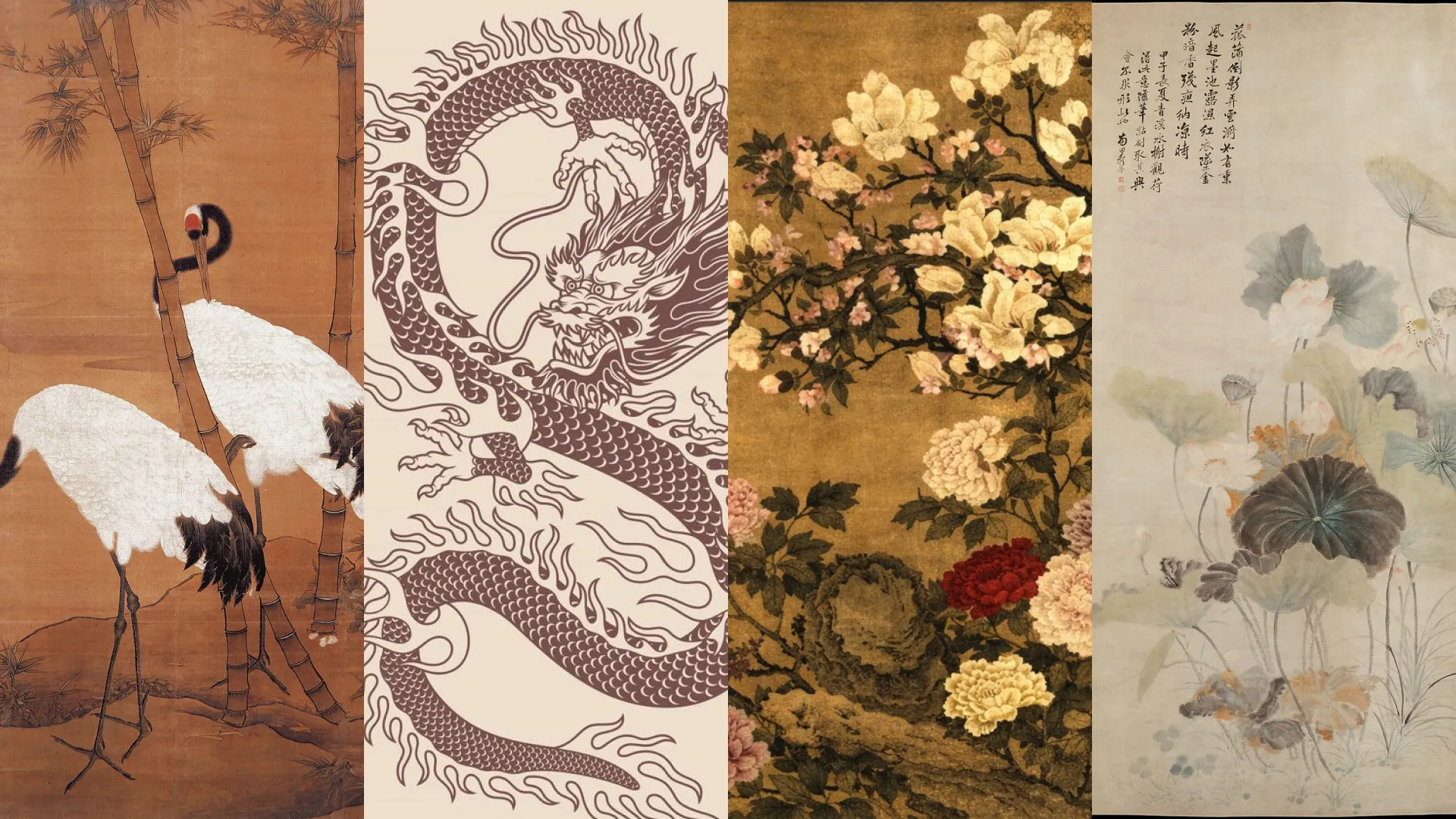
Traditional Chinese tapestry and embroidery rarely functioned as decoration alone. Motifs were often selected for their symbolic associations, with animals, plants and natural imagery carrying layered meanings tied to philosophy, mythology and social aspiration. A woven panel could communicate wishes for prosperity, longevity, harmony or protection through carefully combined imagery understood within Chinese visual culture.
Cranes symbolised immortality and wisdom through their association with Daoist mythology. Dragons represented imperial power and cosmic authority. Peonies became linked to wealth, honour and beauty, while lotus flowers carried spiritual associations with purity and enlightenment through Buddhism. Butterflies symbolised happiness and marital joy, while mountains and flowing water represented permanence, continuity and abundance.
Colour carried equal significance. Gold and yellow historically reflected imperial authority and prosperity. Red symbolised celebration, happiness and good fortune. Deep blue suggested spirituality and immortality, while jade green became associated with refinement and virtue.
These symbolic systems gave Chinese textile art remarkable depth beyond visual beauty alone. Decorative surfaces became forms of storytelling embedded directly into architecture and interior space. Even when viewers did not consciously recognise every symbolic reference, the imagery still shaped the emotional atmosphere of the room through colour, rhythm and cultural familiarity.
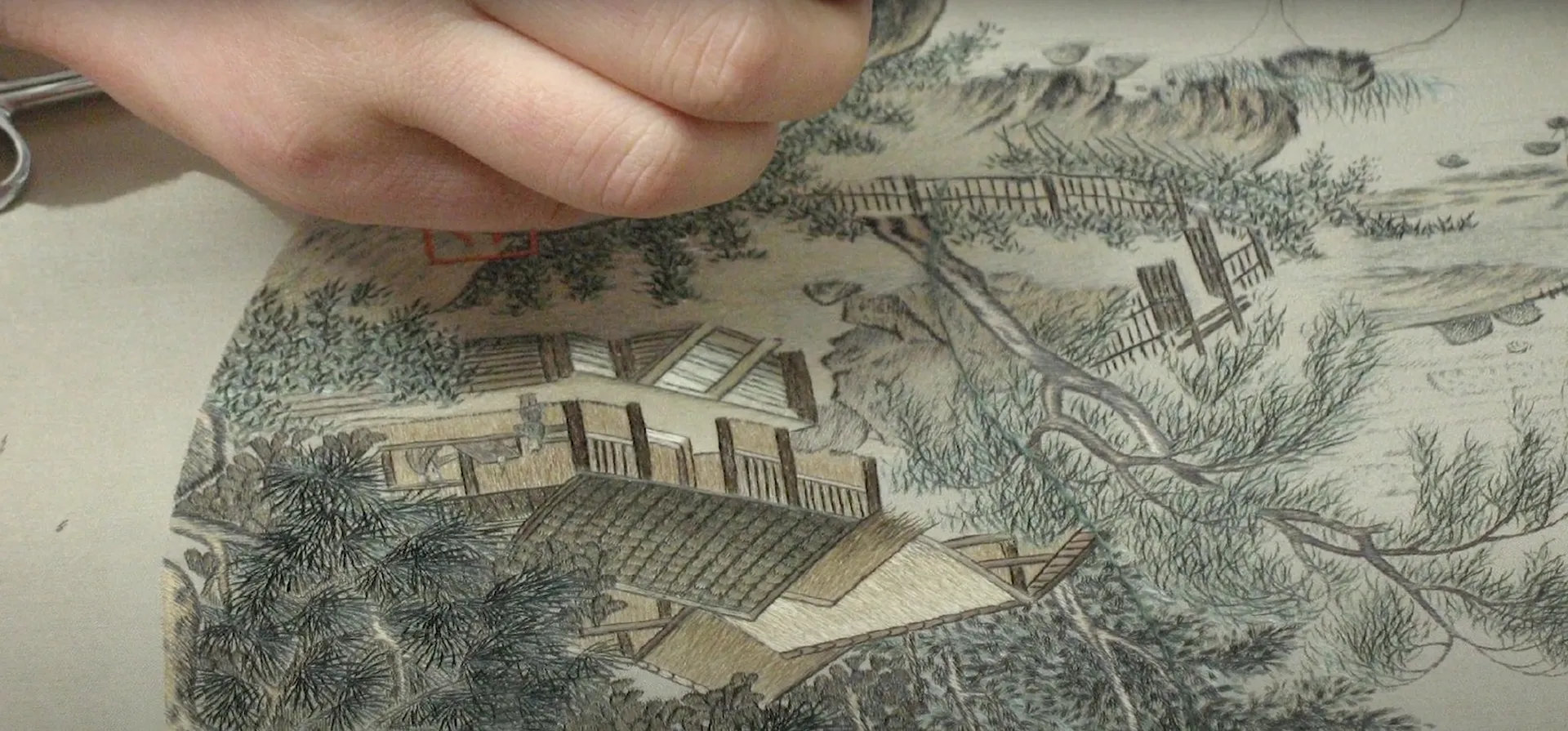
Among China’s most celebrated textile traditions is Su embroidery, originating from Suzhou in Jiangsu province. Widely regarded as one of the highest forms of Chinese embroidery, Su embroidery became renowned for its extraordinary precision, subtle tonal transitions and almost painterly realism.
Artisans would divide silk threads repeatedly into strands fine enough to create near-imperceptible gradations of colour and light. Through careful layering and controlled stitch direction, embroidered birds appeared feathered, flowers gained softness and landscapes developed atmospheric depth similar to ink paintings. Some double-sided embroideries became so refined that each face displayed entirely different imagery while concealing all visible knots and thread endings.
The process demanded immense patience and discipline. Depending on scale and complexity, a single panel could require months or even years to complete.
What distinguished many Chinese textile traditions was not simply technical mastery, but restraint. Unlike heavily decorative European tapestries that often filled entire surfaces densely, Chinese compositions frequently balanced areas of intricate detail with quieter expanses of silk or parchment tones. Negative space became equally important to the composition, allowing imagery to breathe rather than overwhelming the viewer.
This sensitivity toward balance and restraint continues influencing contemporary Asian luxury interiors today, particularly in hospitality spaces where atmosphere is often shaped through layering, texture and subtle detail rather than overt spectacle.

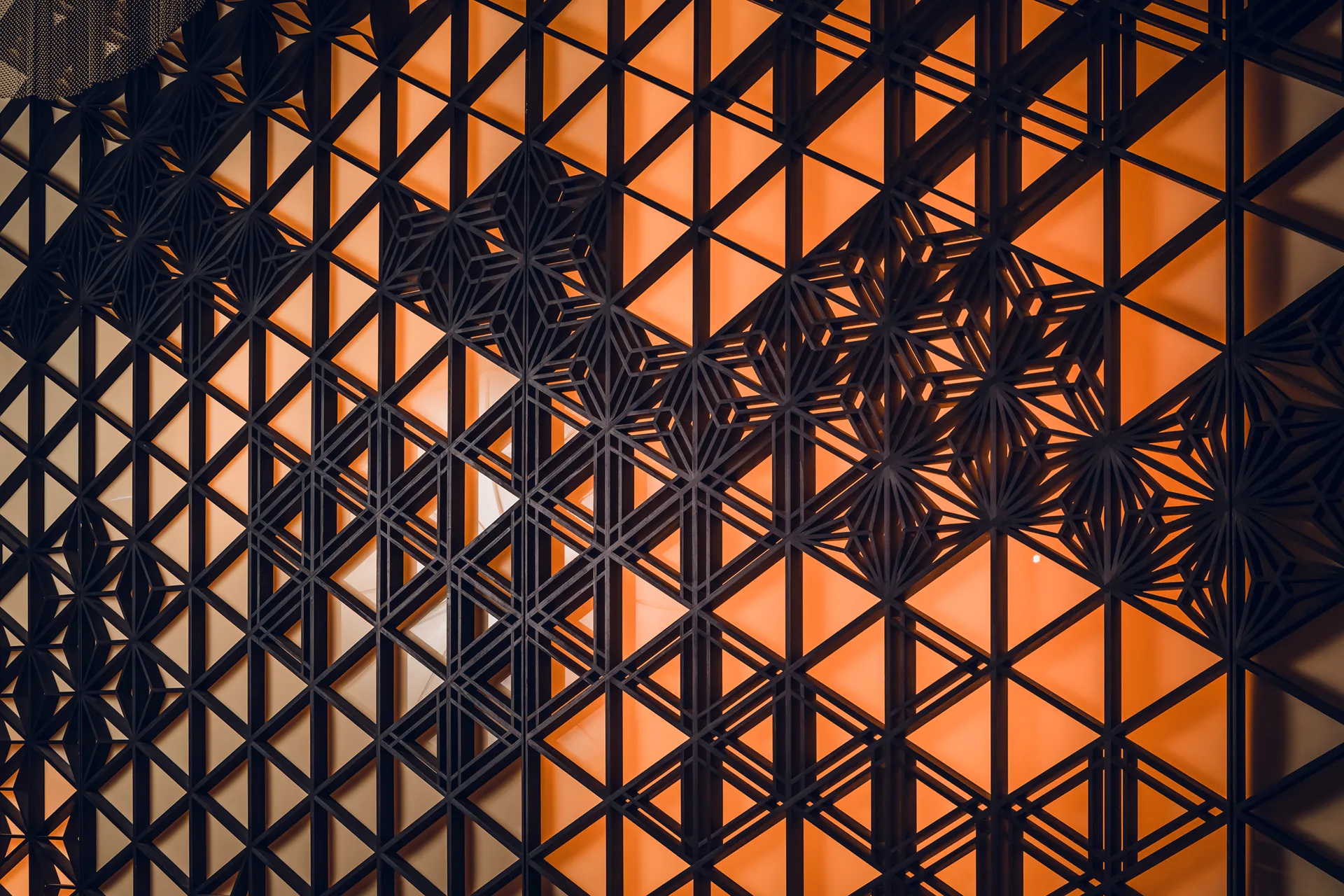
Historically, Chinese interiors relied heavily upon layered materiality. Timber lattice screens, lacquered surfaces, woven artworks, silk drapery and stone flooring worked together to create interiors balancing richness with softness.
Textiles played a particularly important role because they introduced tactility into otherwise monumental architectural settings. In palace halls and aristocratic residences, embroidered wall hangings softened acoustics within large timber spaces while also insulating interiors during colder seasons. Draped fabrics and woven panels reduced the severity of ceremonial rooms and added intimacy within vast architectural environments.
This relationship between textile and architecture remains highly relevant within hospitality design today. Restaurants, lounges and private dining spaces benefit greatly from materials that soften acoustics and create visual warmth. Textile artworks achieve this naturally while simultaneously contributing narrative, craftsmanship and cultural depth.
Unlike reflective metals or polished stone, woven surfaces interact with light more gradually and subtly. Shadows settle into fibres. Colours shift softly throughout the day. Texture reveals itself progressively as guests move closer to the work. The visual experience becomes slower and more intimate, encouraging observation rather than immediate spectacle.

Today, many Asian luxury interiors reinterpret traditional Chinese textile art through a more restrained and architectural lens. Rather than reproducing historical motifs literally, designers often abstract traditional references into tonal embroideries, layered textures and contemporary woven compositions suited to modern hospitality environments.
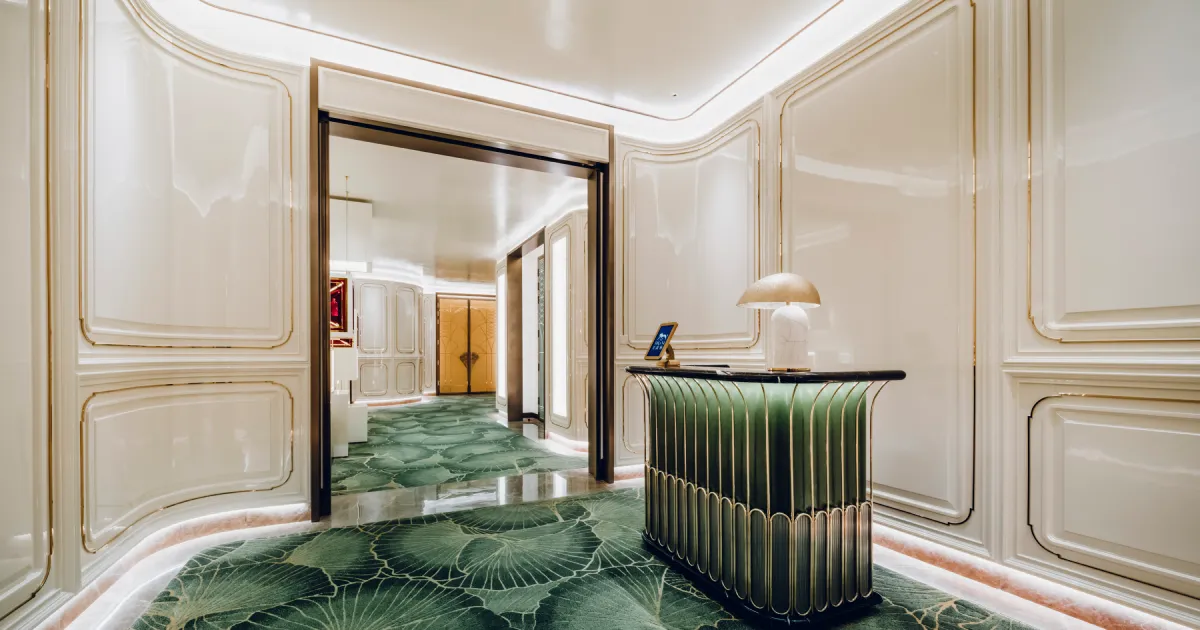
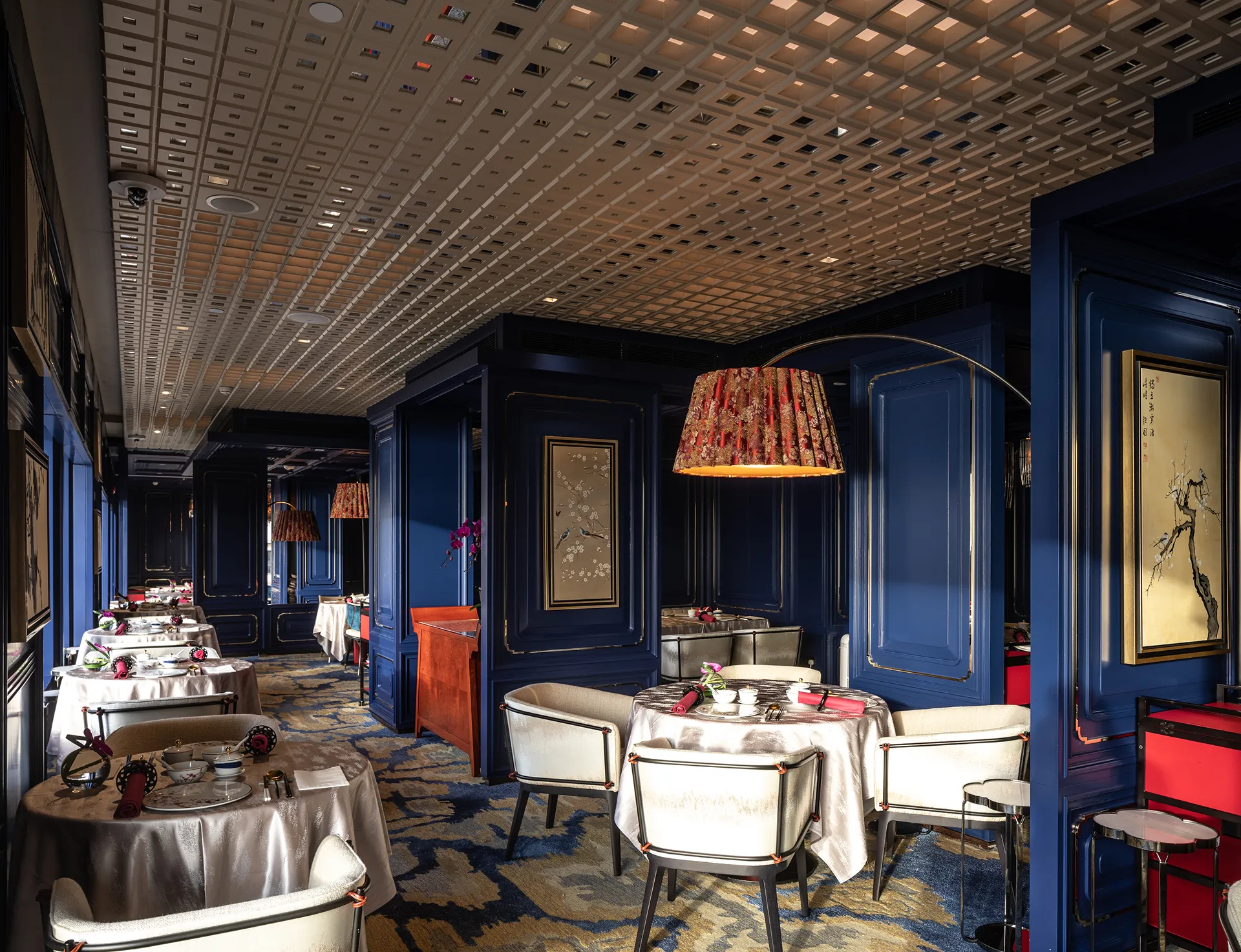
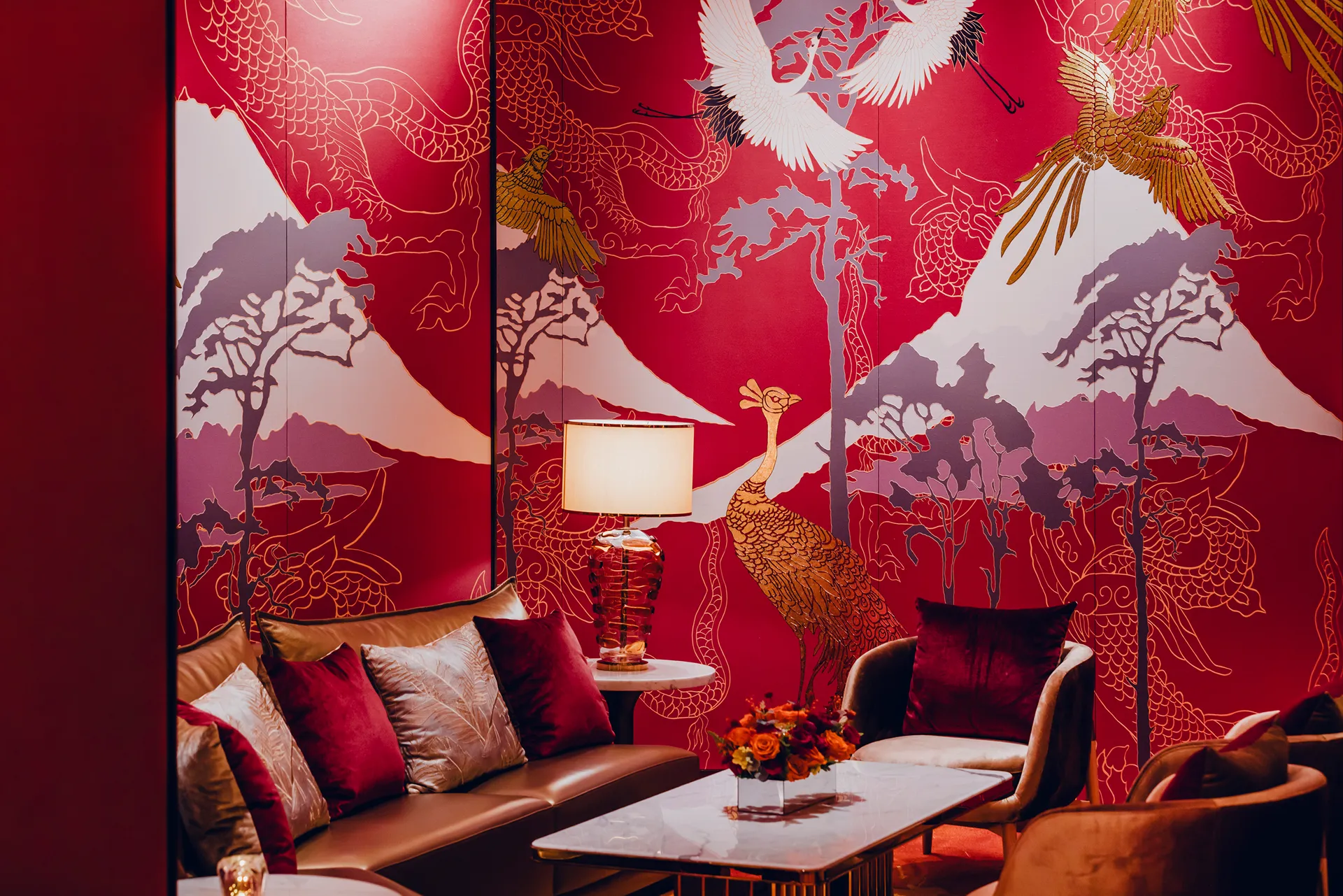
Within projects such as Grand Imperial Court at MGM Macau, tapestry artworks contribute to a broader dialogue between craftsmanship, symbolism and contemporary luxury. Woven panels and textile-inspired detailing introduce softness and cultural depth into spaces layered with lacquer, mirrored surfaces and rich material finishes.
The significance lies less in direct historical recreation and more in continuing the longstanding Chinese relationship between textile art, atmosphere and spatial storytelling. Much like the imperial interiors that inspired them centuries ago, contemporary hospitality spaces continue using tapestry not merely as decoration, but as a material tool capable of shaping mood, intimacy and cultural memory through craft.